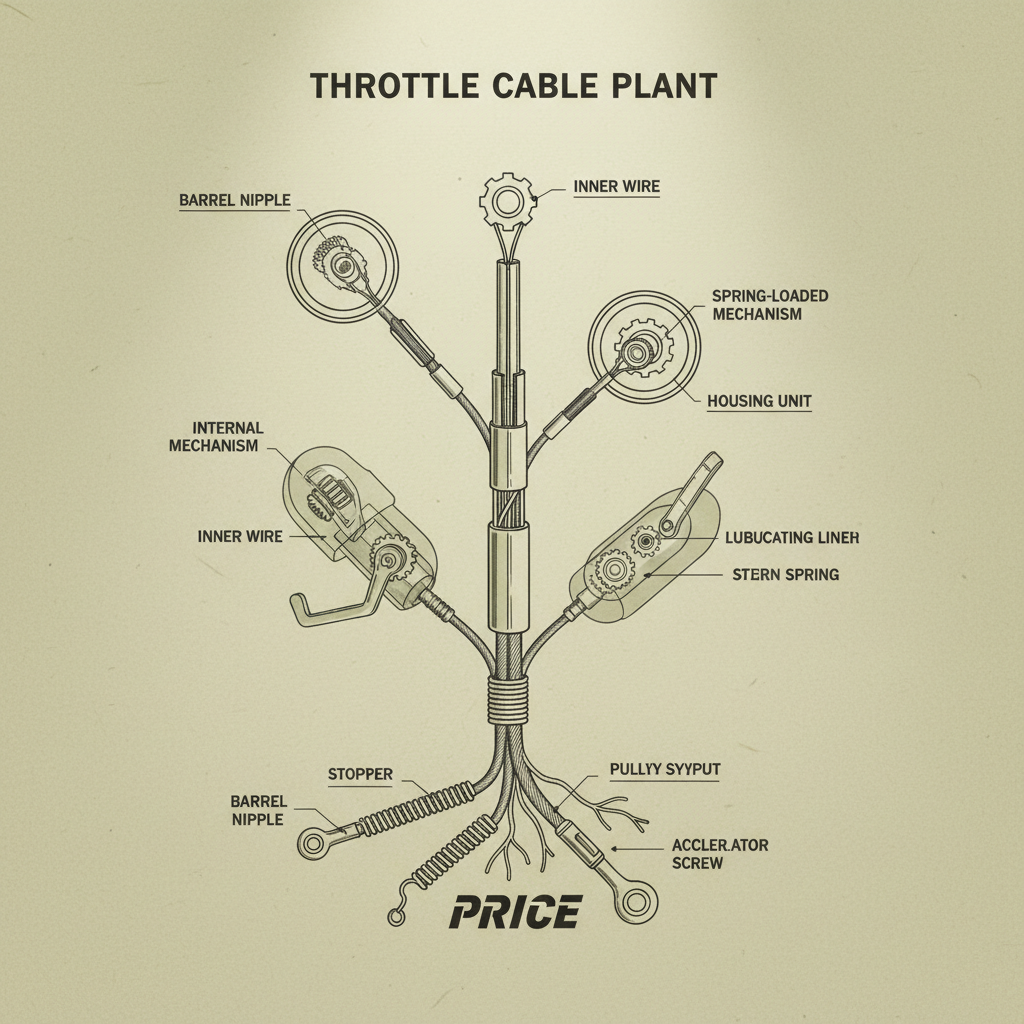
Listen, I’ve been running around construction sites all year, breathing in dust and dealing with engineers. Honestly, lately everyone’s talking about these high-performance gear shift cables. It's not just about cars anymore, you know? ATVs, UTVs, even some industrial machinery… everyone wants smoother, more reliable shifting. Seems like a small thing, but it adds up. It really does.
And it's funny, the things people get hung up on. I saw a design last month that tried to over-engineer the outer jacket. Too stiff, became a nightmare to route. You gotta remember, the guy installing this isn’t in a cleanroom, he’s under a truck in the rain. It has to work in the real world.
The material choice is huge. We’re moving away from simple braided steel cable. It's all about stainless steel strands now, sometimes with a polymer coating. That coating… smells like burnt sugar when you crimp it, strangely enough. I encountered this at a factory in Ningbo last time. Got stuck in my beard for a week. You can feel the difference though, a good cable just moves smoother, doesn't kink up as easily.
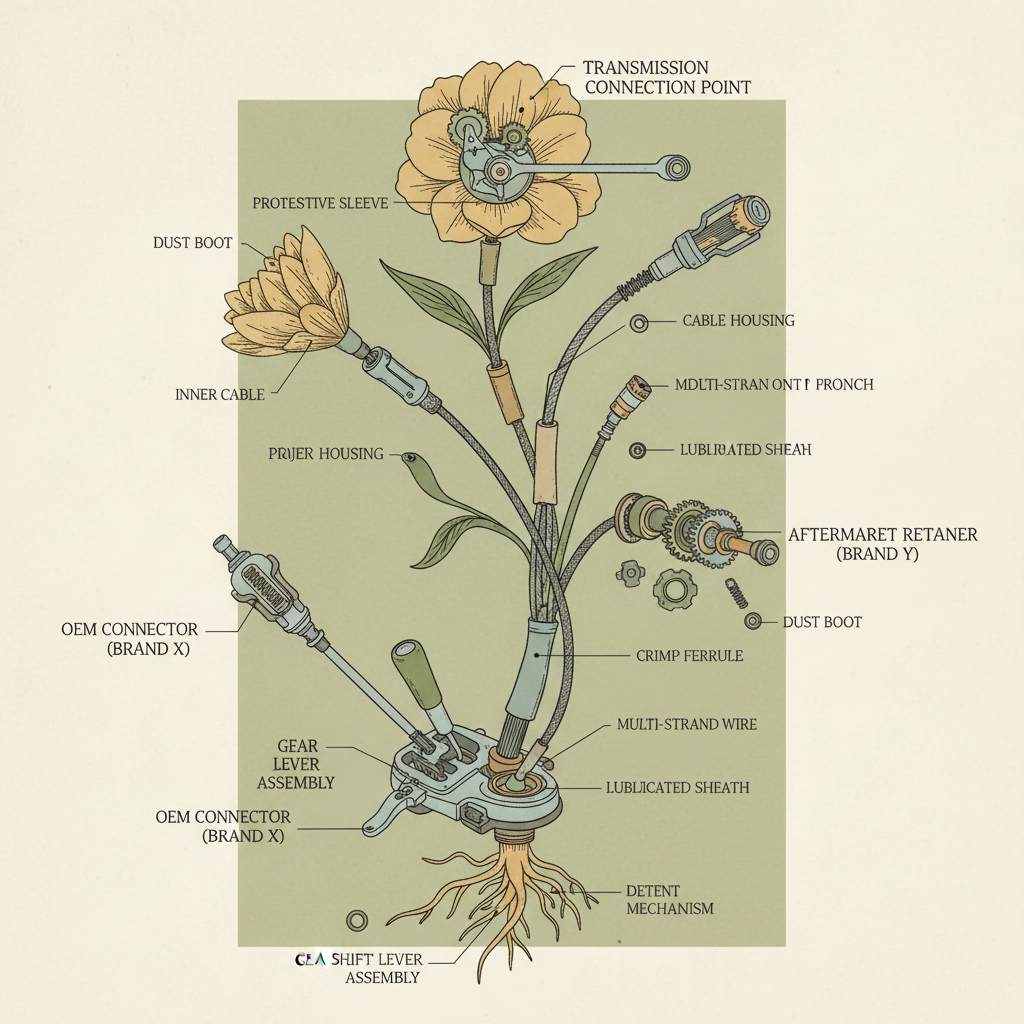
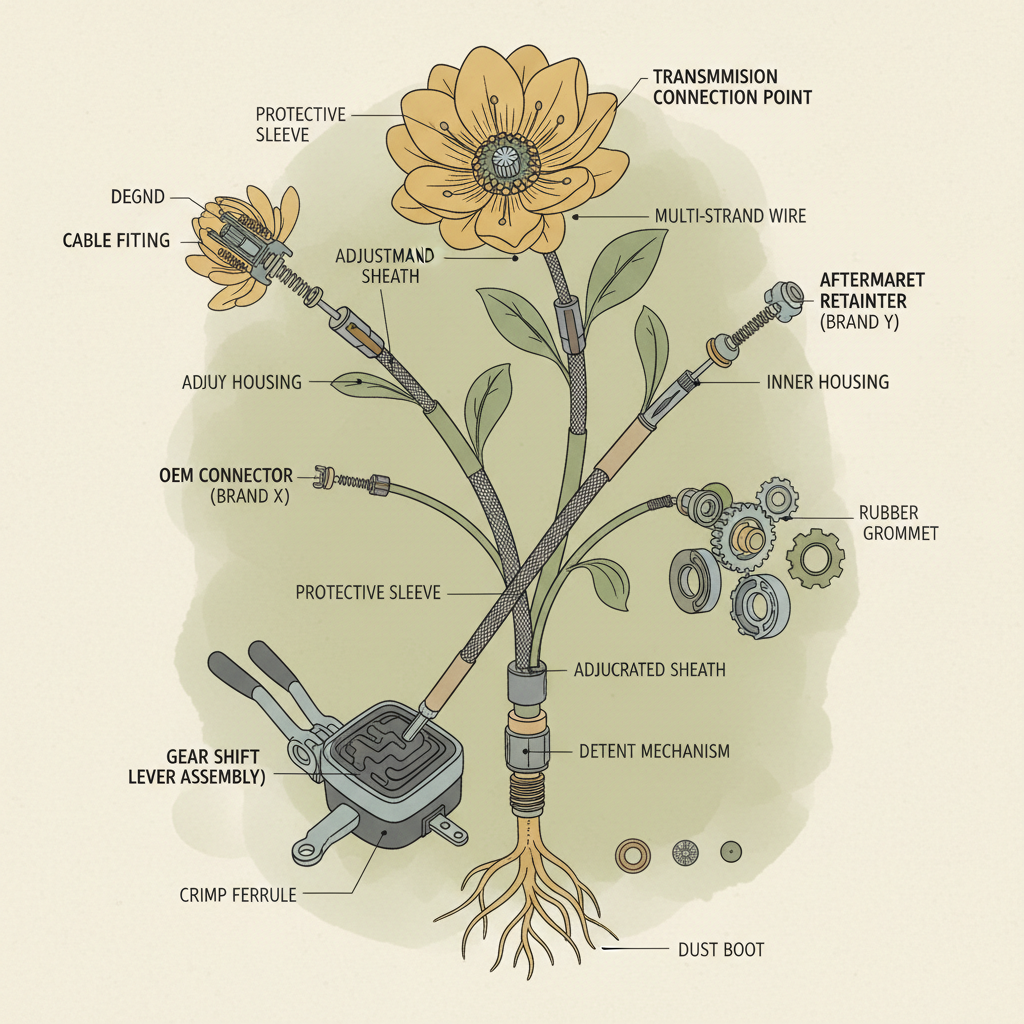
To be honest, the market’s fragmented. A lot of smaller manufacturers in China, a few big players in Europe and the US. Everyone's claiming “high precision” and “low friction,” but it’s the consistency that matters. You need a cable that performs the same way on the 100th unit as it did on the first. That’s where the quality control gets tricky. And, have you noticed, everyone is trying to cut costs? It’s a race to the bottom sometimes.
What’s really trending is the demand for cables that can handle higher loads and temperatures. Especially for off-road vehicles and industrial applications. They’re pushing these machines harder, and the cables need to keep up. It’s not enough to just shift gears, it needs to be reliable in extreme conditions.
That really depends on the conditions. Mud, rocks, salt… all take a toll. But a well-made stainless steel cable with a good coating should last at least a couple of seasons, even with hard use. We’ve seen some last five years, but those are usually on machines that aren't ridden every weekend. It's always a good idea to inspect them annually.
Corrosion is the enemy. It weakens the strands, increases friction, and eventually leads to failure. That's why we emphasize using 316 stainless steel in marine applications. Proper coating is also crucial. You’ll know it's bad when the cable starts to feel rough or sticky, or if you see any rust.
PTFE has a much lower coefficient of friction, meaning the cable moves smoother and lasts longer. It’s also more resistant to heat and chemicals. Nylon is cheaper, but it’s not as durable. Think of it this way: PTFE is like a well-oiled machine, and nylon is…okay. For demanding applications, PTFE is the way to go.
Technically, yes, but it's usually not worth it. The frayed section is already weakened, and any repair is likely to be a temporary fix. It's much safer and more reliable to just replace the entire cable. It's a pain, I know, but it's the right thing to do. Safety first, always.
A light silicone-based lubricant is best. Avoid anything oil-based, as it can attract dirt and grime. Apply it sparingly, and work it into the cable housing. Don't overdo it. Too much lubricant can actually attract more dirt and cause problems. A little goes a long way.
Absolutely. More strands generally mean more flexibility. But it’s not just about the number of strands, it’s also about the diameter of each strand and how they’re woven together. A cable with fewer, thicker strands will be stiffer, while a cable with more, thinner strands will be more flexible. It's a balancing act.
So, yeah, gear shift cables. Seems simple, right? But there’s a lot going on under the surface. Material science, design considerations, real-world testing… it all matters. Ultimately, a good cable makes a big difference in the overall performance and reliability of a vehicle or machine. And in the end, that's what it all comes down to.
If you're looking for high-quality gear shift cables, built to last and designed to perform, check out our website. We’ve been doing this for a long time, and we know what it takes to make a cable that can handle anything. Ultimately, whether this thing works or not, the worker will know the moment he tightens the screw.

 Afrikaans
 Albanian
 Amharic
 Arabic
 Armenian
 Azerbaijani
 Basque
 Belarusian
 Bengali
 Bosnian
 Bulgarian
 Catalan
 Cebuano
 Corsican
 Croatian
 Czech
Czech
 Danish
 Dutch
Dutch
 Esperanto
 Estonian
 Finnish
 French
 Frisian
 Galician
 Georgian
 German
 Greek
Greek
 Gujarati
 Haitian Creole
 Hausa
Hausa
 Hawaiian
 Hebrew
 Hindi
Hindi
 Miao
Miao
 Hungarian
 Icelandic
 Igbo
Igbo
 Indonesian
 Irish
Irish
 Italian
 Japanese
 Javanese
 Kannada
 Kazakh
 Khmer
Khmer
 Rwandese
 Korean
 Kurdish
 Kyrgyz
 Lao
Lao
 Latin
Latin
 Latvian
 Lithuanian
 Luxembourgish
 Macedonian
 Malgashi
 Malay
Malay
 Malayalam
 Maltese
 Maori
Maori
 Marathi
 Mongolian
 Myanmar
 Nepali
 Norwegian
 Norwegian
 Occitan
 Pashto
 Persian
 Polish
 Portuguese
 Punjabi
 Romanian
 Russian
 Samoan
 Scottish Gaelic
 Serbian
 Sesotho
 Shona
Shona
 Sindhi
 Sinhala
 Slovak
 Slovenian
 Somali
 Spanish
 Sundanese
 Swahili
 Swedish
 Tagalog
 Tajik
Tajik
 Tamil
Tamil
 Tatar
Tatar
 Telugu
 Thai
Thai
 Turkish
 Turkmen
 Ukrainian
 Urdu
Urdu
 Uighur
 Uzbek
Uzbek
 Vietnamese
 Welsh
Welsh
 Bantu
Bantu
 Yiddish
 Yoruba
 Zulu
Zulu
 English