
Comprehensive Guide to Push Pull Throttle Assembly Function and Selection
Understanding the Push Pull Throttle Assembly
The push pull throttle assembly is a critical component in a wide range of machinery and vehicles, responsible for translating the operator's input into controlled engine speed. These assemblies are known for their responsiveness, durability, and relative simplicity. This article will provide a comprehensive overview of push pull throttle assemblies, covering their function, applications, types, maintenance, and factors to consider when selecting the right assembly for your needs. Understanding the nuances of these assemblies can significantly improve performance and safety.
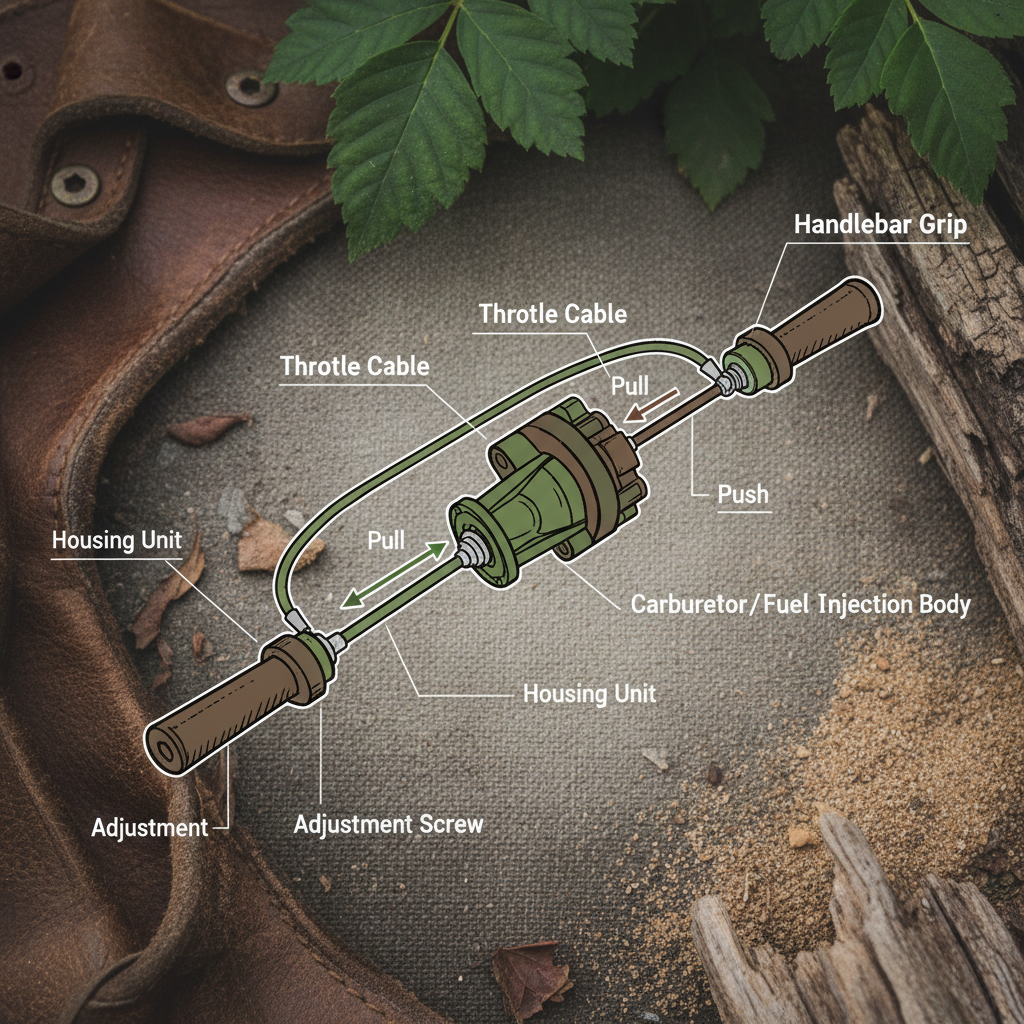
How Does a Push Pull Throttle Assembly Work?
At its core, a push pull throttle assembly utilizes a cable connected to a lever or pedal operated by the user. When the lever is moved, the cable is either pulled (to increase engine speed) or pushed (to decrease engine speed). This movement directly affects the throttle plate within the engine's carburetor or throttle body, controlling the amount of air-fuel mixture entering the engine. The simplicity of this design makes it reliable and easy to maintain. The cable itself is typically housed within a protective sheath to minimize friction and ensure smooth operation.
Key Functionality: Translates operator input into controlled engine speed via a cable and throttle plate mechanism.
Applications of Push Pull Throttle Assemblies
Push pull throttle assemblies are incredibly versatile and find applications in numerous industries. Common uses include: small engine equipment (lawnmowers, generators, and snowblowers), motorcycles, ATVs, marine engines (outboards and inboards), industrial machinery, and even some automotive applications. Their ability to provide precise and responsive throttle control makes them ideal for situations requiring accurate engine management. HWEICable specializes in providing customized throttle solutions for diverse industries.
Common Applications:
• Small Engine Equipment
• Motorcycles & ATVs
• Marine Engines
• Industrial Machinery
Types of Push Pull Throttle Assemblies
While the fundamental principle remains the same, push pull throttle assemblies come in various configurations. These variations are typically based on the cable construction, lever style, and mounting options. Some common types include: Standard Cable Assemblies (most common, utilizing a steel cable within a protective sheath), Stainless Steel Cable Assemblies (ideal for corrosive environments like marine applications), and Remote Throttle Kits (including all necessary components for installing a remote throttle control). The choice of assembly depends on the specific application requirements and environmental conditions.
Maintenance and Troubleshooting of Your Push Pull Throttle Assembly
Regular maintenance is crucial for ensuring the reliable operation of your push pull throttle assembly. This includes lubricating the cable periodically (using a cable lubricant specifically designed for this purpose), checking for fraying or damage to the cable, and inspecting the lever and throttle plate for smooth movement. Common issues include a sticky throttle, sluggish response, or cable breakage. A sticky throttle can often be resolved with lubrication. Cable breakage requires replacement. HWEICable provides high-quality replacement cables and kits.

Selecting the Right Push Pull Throttle Assembly
Choosing the appropriate push pull throttle assembly is vital for optimal performance and longevity. Consider factors such as the engine size and type, the operating environment, and the desired level of responsiveness. Ensure the cable length is sufficient for your application, and select a cable material that can withstand the anticipated conditions. Prioritize quality components and reputable manufacturers like HWEICable to ensure a reliable and durable solution.
Conclusion: The Importance of a Quality Throttle Assembly
A well-maintained and appropriately selected push pull throttle assembly is essential for the safe and efficient operation of various machines and vehicles. By understanding its function, types, and maintenance requirements, you can ensure optimal performance and extend the lifespan of your equipment. Don't compromise on quality – invest in a reliable throttle assembly for peace of mind.
Frequently Asked Questions (FAQs)
How often should I lubricate my push pull throttle cable?
The frequency of lubrication depends on the operating environment and usage. Generally, lubricating the cable every 3-6 months is recommended for typical use. In dusty, dirty, or corrosive environments, more frequent lubrication (every month or even more often) may be necessary. Use a cable lubricant specifically designed for throttle cables to ensure proper penetration and long-lasting protection. Regularly check the cable for smooth operation and relubricate if it feels stiff or sluggish.
What are the signs that my throttle cable needs to be replaced?
Several signs indicate that your throttle cable needs replacement. These include: fraying or visible damage to the cable itself, difficulty in moving the throttle lever smoothly, a sluggish throttle response, or the cable snapping or breaking. Even if the cable appears intact, if it's consistently causing issues with throttle control, it's best to replace it. Continuing to use a damaged cable can be dangerous and lead to unpredictable engine behavior.
Can I repair a broken throttle cable myself?
While it's sometimes possible to repair a minor cable issue (like a slightly bent end), it's generally not recommended to attempt extensive repairs on a throttle cable. Throttle cables are critical safety components, and a faulty repair can lead to dangerous situations. Replacing the entire cable is the safest and most reliable solution. HWEICable offers a wide selection of replacement cables to fit various applications.
What is the importance of using a quality throttle cable?
Using a quality throttle cable is paramount for safety and performance. A poorly made cable may be prone to breakage, stretching, or binding, leading to inaccurate throttle control and potentially dangerous situations. High-quality cables are constructed from durable materials, have smooth internal surfaces to minimize friction, and are designed to withstand the stresses of operation. Investing in a reliable cable ensures consistent performance and peace of mind.
-
High Performance Throttle Cable Linkage for Precision MachineryNewsApr.16,2026
-
Ultimate Guide to Choosing a Quality carburetor throttle cableNewsApr.09,2026
-
Comprehensive Guide to the Dual Cable Throttle Assembly for Optimal PerformanceNewsApr.07,2026
-
The Importance of a Quality Throttle Cable Wire for Engine PerformanceNewsApr.04,2026
-
Understanding the Importance of a Manual Throttle Cable for Optimal PerformanceNewsMar.31,2026
-
Understanding the Critical Role of Throttle Rod Linkage in Engine PerformanceNewsMar.28,2026
 Afrikaans
 Albanian
 Amharic
 Arabic
 Armenian
 Azerbaijani
 Basque
 Belarusian
 Bengali
 Bosnian
 Bulgarian
 Catalan
 Cebuano
 Corsican
 Croatian
 Czech
Czech
 Danish
 Dutch
Dutch
 Esperanto
 Estonian
 Finnish
 French
 Frisian
 Galician
 Georgian
 German
 Greek
Greek
 Gujarati
 Haitian Creole
 Hausa
Hausa
 Hawaiian
 Hebrew
 Hindi
Hindi
 Miao
Miao
 Hungarian
 Icelandic
 Igbo
Igbo
 Indonesian
 Irish
Irish
 Italian
 Japanese
 Javanese
 Kannada
 Kazakh
 Khmer
Khmer
 Rwandese
 Korean
 Kurdish
 Kyrgyz
 Lao
Lao
 Latin
Latin
 Latvian
 Lithuanian
 Luxembourgish
 Macedonian
 Malgashi
 Malay
Malay
 Malayalam
 Maltese
 Maori
Maori
 Marathi
 Mongolian
 Myanmar
 Nepali
 Norwegian
 Norwegian
 Occitan
 Pashto
 Persian
 Polish
 Portuguese
 Punjabi
 Romanian
 Russian
 Samoan
 Scottish Gaelic
 Serbian
 Sesotho
 Shona
Shona
 Sindhi
 Sinhala
 Slovak
 Slovenian
 Somali
 Spanish
 Sundanese
 Swahili
 Swedish
 Tagalog
 Tajik
Tajik
 Tamil
Tamil
 Tatar
Tatar
 Telugu
 Thai
Thai
 Turkish
 Turkmen
 Ukrainian
 Urdu
Urdu
 Uighur
 Uzbek
Uzbek
 Vietnamese
 Welsh
Welsh
 Bantu
Bantu
 Yiddish
 Yoruba
 Zulu
Zulu
 English