
Understanding Throttle Body Cable Function Types and Reliable Selection
Understanding the Throttle Body Cable: A Comprehensive Guide
The throttle body cable is a critical component in internal combustion engines, responsible for transmitting the driver's input from the accelerator pedal to the throttle body. This controls the amount of air entering the engine, directly impacting performance. Choosing the right cable is vital for optimal engine operation and vehicle safety. This article provides an in-depth look at throttle body cables, covering their function, types, common issues, and how to select a high-quality cable from a reliable supplier like HWEI Cable.

How Does a Throttle Body Cable Work?
Essentially, the throttle body cable acts as a mechanical link between your foot and the engine's air intake. When you press the accelerator pedal, it pulls on the cable, which then opens the throttle plate within the throttle body. The further you depress the pedal, the more the throttle plate opens, allowing more air into the engine. This increased airflow is mixed with fuel, creating a richer mixture that delivers more power. The cable’s smooth operation is crucial for responsive acceleration and overall engine performance. A damaged or improperly adjusted throttle body cable can lead to hesitant acceleration, stalling, or even a complete loss of power.
Key Function: Transmits accelerator pedal movement to the throttle body, controlling airflow and engine power.
Types of Throttle Body Cables
While the basic principle remains the same, throttle body cables come in several variations. These differences mainly relate to their construction and the way they are connected. Common types include:
- Standard Cable: The most basic type, typically consisting of a steel cable encased in a protective sheath.
- Coated Cable: Features an additional layer of coating for increased durability and corrosion resistance.
- Adjustable Cable: Allows for fine-tuning of the cable length, enabling precise throttle control.
- Return Cable: Includes a spring mechanism to automatically return the throttle to its idle position when the accelerator pedal is released.
Selecting the appropriate type depends on the specific vehicle application and the desired level of performance and reliability. HWEI Cable offers a diverse range of throttle body cable options to suit various needs.
Throttle Body Cable Considerations:
• Material Quality: Stainless steel cables offer superior corrosion resistance.
• Sheath Protection: A durable sheath protects the cable from fraying and contaminants.
• Proper Length: Ensure the cable length is appropriate for your vehicle’s configuration.
Throttle Body Cable vs. Electronic Throttle Control (ETC)
Modern vehicles are increasingly adopting Electronic Throttle Control (ETC), often referred to as “drive-by-wire.” ETC systems replace the mechanical cable with electronic sensors and actuators. While ETC offers advantages like improved fuel efficiency and integration with other electronic systems, traditional throttle body cables remain prevalent in older vehicles and certain performance applications where a direct mechanical connection is preferred. Here's a comparison:
Common Issues and Troubleshooting
Like any mechanical component, throttle body cables can experience issues over time. Common problems include fraying, binding, stretching, and corrosion. Symptoms of a faulty cable can include sticky throttle response, difficulty maintaining idle speed, or complete throttle failure. Regular inspection and lubrication can help prevent these issues. If a cable is damaged, it should be replaced immediately to ensure safe operation. HWEI Cable provides durable, reliable replacements for a wide range of vehicles.
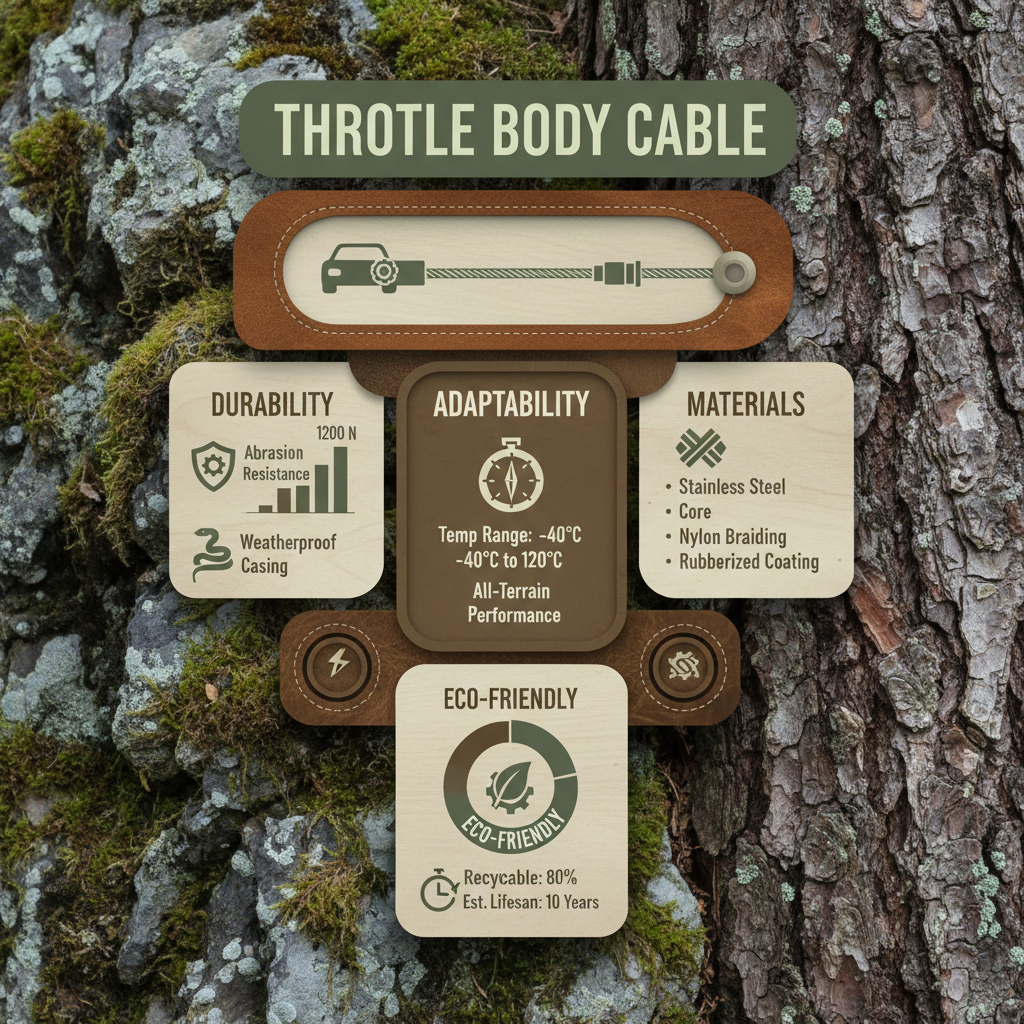
Choosing the Right Throttle Body Cable from HWEI Cable
When selecting a throttle body cable, prioritize quality and durability. HWEI Cable uses high-quality materials and rigorous quality control processes to ensure our cables meet or exceed OEM specifications. We offer a wide selection of cables for various vehicle makes and models, and our experienced team can help you find the perfect fit for your needs. Contact us today to discuss your requirements and experience the HWEI Cable difference!
Conclusion: Reliable Throttle Control for Optimal Performance
A properly functioning throttle body cable is essential for safe and efficient vehicle operation. Investing in a high-quality cable from a trusted supplier like HWEI Cable ensures reliability, durability, and optimal performance. Don't compromise on quality – choose HWEI Cable for your throttle body cable needs.
Frequently Asked Questions (FAQs)
How often should I inspect my throttle body cable?
It's recommended to visually inspect your throttle body cable at least twice a year, or more frequently if you operate your vehicle in harsh conditions (e.g., dusty, muddy, or corrosive environments). Look for any signs of fraying, corrosion, binding, or damage to the sheath. Also, check the cable’s movement to ensure it operates smoothly without any resistance. Regular maintenance can prevent unexpected failures and ensure optimal performance. Consider lubricating the cable periodically to maintain smooth operation.
What are the signs of a failing throttle body cable?
Several symptoms can indicate a failing throttle body cable. These include a sticky or sluggish throttle response, difficulty maintaining a consistent idle speed, engine stalling, hesitation during acceleration, or a noticeable delay between pressing the accelerator pedal and the engine responding. In some cases, the cable may feel loose or floppy. If you experience any of these symptoms, it's crucial to have the cable inspected and replaced if necessary.
Can I repair a damaged throttle body cable?
While minor fraying might seem repairable, it's generally not recommended to attempt repairs on a throttle body cable. The cable is a critical safety component, and even a small defect can lead to unpredictable throttle control. Attempting a repair could compromise the cable’s integrity and create a dangerous situation. The safest and most reliable solution is to replace the damaged cable with a new, high-quality cable from a reputable supplier like HWEI Cable.
What materials are throttle body cables typically made from?
Throttle body cables are primarily constructed from high-strength steel wire for durability and resistance to stretching. The wire is encased in a protective sheath, often made from PVC or other synthetic materials, to prevent corrosion and fraying. Higher-quality cables may feature stainless steel wire for enhanced corrosion resistance, especially important in environments exposed to moisture and salt. The cable ends are typically fitted with connectors made from metal or durable plastic to ensure a secure connection to the throttle body and accelerator pedal.
-
High Performance Throttle Cable Linkage for Precision MachineryNewsApr.16,2026
-
Ultimate Guide to Choosing a Quality carburetor throttle cableNewsApr.09,2026
-
Comprehensive Guide to the Dual Cable Throttle Assembly for Optimal PerformanceNewsApr.07,2026
-
The Importance of a Quality Throttle Cable Wire for Engine PerformanceNewsApr.04,2026
-
Understanding the Importance of a Manual Throttle Cable for Optimal PerformanceNewsMar.31,2026
-
Understanding the Critical Role of Throttle Rod Linkage in Engine PerformanceNewsMar.28,2026
 Afrikaans
 Albanian
 Amharic
 Arabic
 Armenian
 Azerbaijani
 Basque
 Belarusian
 Bengali
 Bosnian
 Bulgarian
 Catalan
 Cebuano
 Corsican
 Croatian
 Czech
Czech
 Danish
 Dutch
Dutch
 Esperanto
 Estonian
 Finnish
 French
 Frisian
 Galician
 Georgian
 German
 Greek
Greek
 Gujarati
 Haitian Creole
 Hausa
Hausa
 Hawaiian
 Hebrew
 Hindi
Hindi
 Miao
Miao
 Hungarian
 Icelandic
 Igbo
Igbo
 Indonesian
 Irish
Irish
 Italian
 Japanese
 Javanese
 Kannada
 Kazakh
 Khmer
Khmer
 Rwandese
 Korean
 Kurdish
 Kyrgyz
 Lao
Lao
 Latin
Latin
 Latvian
 Lithuanian
 Luxembourgish
 Macedonian
 Malgashi
 Malay
Malay
 Malayalam
 Maltese
 Maori
Maori
 Marathi
 Mongolian
 Myanmar
 Nepali
 Norwegian
 Norwegian
 Occitan
 Pashto
 Persian
 Polish
 Portuguese
 Punjabi
 Romanian
 Russian
 Samoan
 Scottish Gaelic
 Serbian
 Sesotho
 Shona
Shona
 Sindhi
 Sinhala
 Slovak
 Slovenian
 Somali
 Spanish
 Sundanese
 Swahili
 Swedish
 Tagalog
 Tajik
Tajik
 Tamil
Tamil
 Tatar
Tatar
 Telugu
 Thai
Thai
 Turkish
 Turkmen
 Ukrainian
 Urdu
Urdu
 Uighur
 Uzbek
Uzbek
 Vietnamese
 Welsh
Welsh
 Bantu
Bantu
 Yiddish
 Yoruba
 Zulu
Zulu
 English