
Ultimate Guide to Choosing a Quality carburetor throttle cable
The Ultimate Guide to Choosing the Right Carburetor Throttle Cable
Whether you are restoring a vintage motorcycle, maintaining a lawnmower, or optimizing an industrial engine, the precision of your engine's response depends heavily on the carburetor throttle cable. This critical component acts as the physical bridge between the operator's input and the engine's air intake, directly influencing acceleration and fuel efficiency. A worn or low-quality cable can lead to sticking throttles or delayed responses, which are not only frustrating but potentially dangerous. In this guide, we will explore the technical nuances, material choices, and maintenance tips to ensure your machinery operates at peak performance.
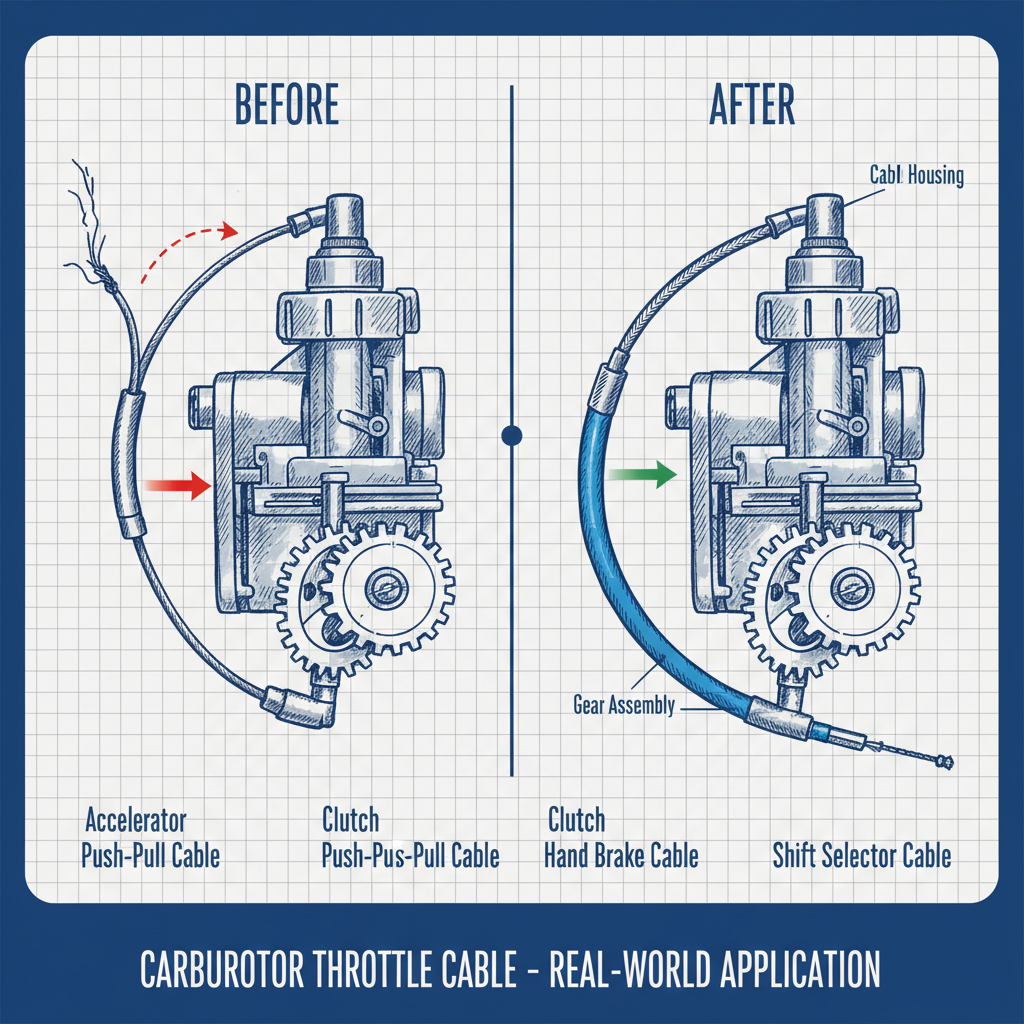
How a Carburetor Throttle Cable Works
At its core, the carburetor throttle cable consists of an inner wire (the cable) and an outer protective sleeve (the housing). When you twist the grip or press the pedal, the inner wire pulls the throttle butterfly valve or slide within the carburetor, allowing more air and fuel to enter the combustion chamber. Precision tension is key here; if the cable is too loose, you lose a portion of your throttle travel. If it is too tight, the engine may idle too high, leading to premature wear and fuel waste.
Pro Tip: Always check for "cable slack" during your pre-ride or pre-operation inspection to ensure the return spring can fully close the throttle for safety.
Materials and Durability of Throttle Cables
The environment in which an engine operates—heat, vibration, and moisture—demands high-grade materials. Most professional-grade carburetor throttle cable assemblies utilize stainless steel or galvanized steel for the inner strand to prevent corrosion. The outer housing is typically made from a combination of steel spiral and a weather-resistant polymer jacket. High-performance cables often feature Teflon (PTFE) linings, which significantly reduce internal friction, resulting in a smoother "feel" and longer lifespan.
Comparing Standard vs. Premium Carburetor Throttle Cable
Not all cables are created equal. While generic replacements might save money upfront, they often suffer from "cable stretch" over time. A premium carburetor throttle cable is engineered with tighter tolerances and superior lubrication. This ensures that the mechanical advantage is maintained throughout the entire length of the cable, providing a linear and predictable response from the user.
Common Signs Your Carburetor Throttle Cable Needs Replacement
Identifying a failing cable early can prevent engine damage or safety mishaps. The most common symptom is a "sticky" throttle, where the engine does not immediately return to idle after you release the control. This is usually caused by internal fraying of the steel strands or contamination within the housing. Other red flags include a "spongy" feel when accelerating, visible kinks in the outer jacket, or rust bleeding through the ends of the cable. Replacing your carburetor throttle cable at the first sign of fraying is essential, as a snapped cable will leave you stranded.
Maintenance Checklist:
• Inspect cable ends for fraying or "bird-caging"
• Verify smooth, snap-back return of the throttle grip
• Check for kinks or sharp bends in the cable routing
• Apply high-quality cable lubricant every season
Technical Specifications for Industrial Cable Sourcing
For B2B buyers and manufacturers, sourcing the correct carburetor throttle cable requires adherence to strict technical specs to ensure compatibility with different carburetor brands. Key considerations include the wire diameter, housing outer diameter (OD), and the type of end-terminals (e.g., barrel ends, threaded studs). At HWEI Cable, we provide customized solutions that meet international standards for tensile strength and fatigue resistance. Below are the standard specifications we typically offer for high-demand applications:
Conclusion: Ensure Peak Performance with Quality Cables
The humble carburetor throttle cable is a vital link in your engine's operation. From the materials used in the inner core to the friction-reducing properties of the liner, every detail impacts the safety and efficiency of your machinery. By choosing premium, precision-engineered cables, you reduce the need for frequent adjustments and minimize the risk of mechanical failure. For those seeking reliability and durability, investing in high-quality control cables is the smartest path to long-term engine health.
Frequently Asked Questions (FAQs)
How often should I replace my carburetor throttle cable?
There is no fixed schedule for replacement, as it depends entirely on the usage environment. However, it is recommended to inspect the cable every 12 months or every 5,000 miles of operation. If you notice any "stickiness" in the throttle response or see visible fraying at the ends, you should replace the carburetor throttle cable immediately. Preventative replacement is always safer than waiting for a cable to snap during operation.
Can I lubricate my old throttle cable to make it feel new?
Lubrication can help temporarily, but it depends on the cause of the friction. If the cable is simply dry, a specialized cable lubricant can improve the feel. However, if the inner steel strands have started to fray (creating "burrs" inside the housing), lubrication will not fix the problem and may even trap dirt, accelerating wear. If you feel a "gritty" sensation when moving the throttle, it is a sign of internal damage and the cable must be replaced.
What is "cable stretch" and why does it happen?
Cable stretch occurs when the inner wire undergoes permanent elongation due to repeated tension and poor material quality. This happens more frequently in low-grade steel cables. When the cable stretches, it creates excess slack, meaning you have to pull the throttle further to get the same engine response. High-quality carburetor throttle cables use high-carbon or stainless steel that is pre-stretched or engineered for higher dimensional stability to prevent this issue.
Do I need a specific cable for different types of carburetors?
Yes, absolutely. Different carburetors have different linkage designs—some use a push-pull system, while others use a simple pull-and-spring return. The length, the diameter of the housing, and the shape of the end-terminals must match your specific carburetor model exactly. Using an incompatible cable can lead to improper throttle opening or an inability to close the valve completely. Always refer to your engine's technical manual or contact a specialist like HWEI Cable to ensure a perfect fit.
-
High Performance Throttle Cable Linkage for Precision MachineryNewsApr.16,2026
-
Ultimate Guide to Choosing a Quality carburetor throttle cableNewsApr.09,2026
-
Comprehensive Guide to the Dual Cable Throttle Assembly for Optimal PerformanceNewsApr.07,2026
-
The Importance of a Quality Throttle Cable Wire for Engine PerformanceNewsApr.04,2026
-
Understanding the Importance of a Manual Throttle Cable for Optimal PerformanceNewsMar.31,2026
-
Understanding the Critical Role of Throttle Rod Linkage in Engine PerformanceNewsMar.28,2026
 Afrikaans
 Albanian
 Amharic
 Arabic
 Armenian
 Azerbaijani
 Basque
 Belarusian
 Bengali
 Bosnian
 Bulgarian
 Catalan
 Cebuano
 Corsican
 Croatian
 Czech
Czech
 Danish
 Dutch
Dutch
 Esperanto
 Estonian
 Finnish
 French
 Frisian
 Galician
 Georgian
 German
 Greek
Greek
 Gujarati
 Haitian Creole
 Hausa
Hausa
 Hawaiian
 Hebrew
 Hindi
Hindi
 Miao
Miao
 Hungarian
 Icelandic
 Igbo
Igbo
 Indonesian
 Irish
Irish
 Italian
 Japanese
 Javanese
 Kannada
 Kazakh
 Khmer
Khmer
 Rwandese
 Korean
 Kurdish
 Kyrgyz
 Lao
Lao
 Latin
Latin
 Latvian
 Lithuanian
 Luxembourgish
 Macedonian
 Malgashi
 Malay
Malay
 Malayalam
 Maltese
 Maori
Maori
 Marathi
 Mongolian
 Myanmar
 Nepali
 Norwegian
 Norwegian
 Occitan
 Pashto
 Persian
 Polish
 Portuguese
 Punjabi
 Romanian
 Russian
 Samoan
 Scottish Gaelic
 Serbian
 Sesotho
 Shona
Shona
 Sindhi
 Sinhala
 Slovak
 Slovenian
 Somali
 Spanish
 Sundanese
 Swahili
 Swedish
 Tagalog
 Tajik
Tajik
 Tamil
Tamil
 Tatar
Tatar
 Telugu
 Thai
Thai
 Turkish
 Turkmen
 Ukrainian
 Urdu
Urdu
 Uighur
 Uzbek
Uzbek
 Vietnamese
 Welsh
Welsh
 Bantu
Bantu
 Yiddish
 Yoruba
 Zulu
Zulu
 English