
Understanding the Importance of a Manual Throttle Cable for Optimal Performance
Understanding the Importance of a Manual Throttle Cable
In many mechanical systems, precise control is paramount. A crucial component in achieving this control is the manual throttle cable. This seemingly simple cable plays a vital role in regulating engine speed in various applications, from lawnmowers and motorcycles to heavy-duty industrial equipment. Choosing the right cable is essential for performance, safety, and longevity. This article delves into the details of manual throttle cables, their applications, key features, and how to select the best cable for your needs. We’ll explore the importance of quality construction and the benefits of partnering with a reliable supplier like HW Cable.
What is a Manual Throttle Cable and How Does it Work?
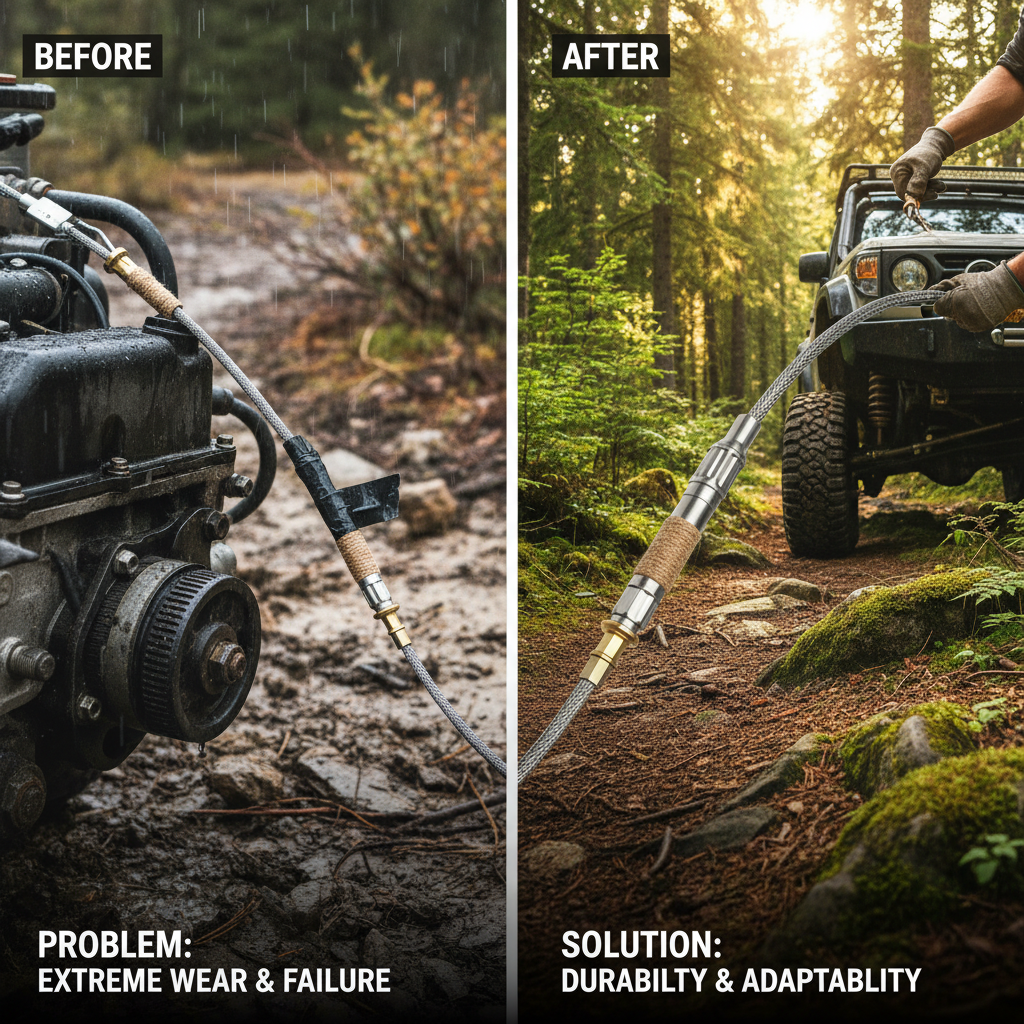
A manual throttle cable is a mechanical linkage that transmits motion from the throttle control (typically a lever or pedal) to the carburetor or throttle body of an engine. When the operator manipulates the throttle control, the cable pulls or rotates, opening or closing the throttle valve. This, in turn, regulates the amount of air-fuel mixture entering the engine, directly controlling engine speed. The cable consists of an inner wire (the core) encased within a protective outer sheath. This design allows for smooth, efficient operation and minimizes friction. High-quality cables utilize corrosion-resistant materials to ensure durability and reliable performance, especially in harsh environments. You can find a wide range of options at HW Cable.
Key Benefits: Precise engine control, reliable performance, durability, and compatibility with various engine types.
Applications of Manual Throttle Cables
The applications for manual throttle cables are incredibly diverse. Here are some common examples:
- Lawn and Garden Equipment: Lawnmowers, tractors, and other outdoor power equipment rely heavily on throttle cables for precise speed control.
- Motorcycles and ATVs: Essential for regulating engine speed and ensuring smooth acceleration.
- Marine Applications: Outboard motors and personal watercraft utilize throttle cables for steering and speed control.
- Industrial Machinery: Various industrial engines and equipment require throttle cables for efficient operation.
- Construction Equipment: Generators, compressors, and other construction tools rely on accurate throttle control.
Choosing the Right Manual Throttle Cable: Key Considerations
Selecting the correct manual throttle cable is crucial for optimal performance. Several factors should be considered:
- Cable Length: Ensure the cable is the correct length to reach from the throttle control to the engine without being stretched or kinked.
- Cable Diameter: The diameter should match the requirements of the throttle control and carburetor/throttle body.
- End Fittings: Correct end fittings are essential for a secure and reliable connection. Common types include threaded ends, clevis ends, and quick-disconnect fittings.
- Material: High-quality materials like stainless steel are preferred for corrosion resistance and durability.
- Sheath Material: Durable and flexible sheath materials, often PVC or polyethylene, protect the inner cable from damage and friction.
Important Considerations:
• Ensure proper cable length to avoid stretching or kinking.
• Verify compatibility with your engine type and throttle control.
• Choose corrosion-resistant materials for long-lasting performance.
Manual Throttle Cable vs. Electronic Throttle Control
While electronic throttle control (ETC) is becoming increasingly common, manual throttle cables still offer several advantages. ETC systems rely on sensors, actuators, and computer controls, making them more complex and potentially prone to electronic failures. Manual throttle cables are simpler, more reliable, and often more cost-effective. They offer a direct mechanical connection, providing immediate feedback to the operator. Here's a comparison:
Why Choose HW Cable for Your Throttle Cable Needs?
HW Cable is a leading manufacturer and supplier of high-quality manual throttle cables. We offer a comprehensive range of cables to meet diverse application requirements. Our commitment to quality, reliability, and customer satisfaction sets us apart. We use premium materials and employ rigorous quality control procedures to ensure that every cable meets the highest standards. We also provide custom cable design and manufacturing services to meet your specific needs. Contact us today to learn more about our products and services.
Conclusion: Reliable Control with HW Cable
Investing in a high-quality manual throttle cable from a trusted supplier like HW Cable ensures reliable performance, longevity, and safety. Don't compromise on quality – choose a cable that will deliver consistent and precise engine control.
Frequently Asked Questions (FAQs)
What is the typical lifespan of a manual throttle cable?
The lifespan of a manual throttle cable can vary depending on usage, environmental conditions, and quality of construction. Generally, a well-maintained cable can last for several years. However, factors such as exposure to harsh chemicals, excessive heat, or frequent bending can shorten its lifespan. Regularly inspecting the cable for fraying, corrosion, or stiffness is crucial. Replacing the cable proactively can prevent unexpected failures and ensure continued safe operation. HW Cable’s cables are designed for longevity, using high-quality materials and robust construction.
How do I properly lubricate a manual throttle cable?
Proper lubrication is key to maintaining smooth throttle operation and extending the cable’s lifespan. Use a cable lubricant specifically designed for this purpose – do not use general-purpose oils or greases. Apply the lubricant to the cable inner wire and allow it to penetrate the sheath. Work the cable back and forth to distribute the lubricant evenly. Avoid over-lubricating, as this can attract dirt and debris. HW Cable recommends lubricating cables every 6-12 months, depending on usage conditions.
What should I do if my throttle cable feels stiff or sticky?
A stiff or sticky throttle cable indicates friction within the sheath, which can impair throttle control and potentially lead to safety issues. First, try lubricating the cable as described above. If the stiffness persists, inspect the cable for kinks, bends, or damage. Ensure the cable is routed properly and isn't obstructed. If the cable is severely damaged or corroded, it should be replaced immediately. HW Cable offers a range of replacement cables to suit various applications.
Does HW Cable offer custom throttle cable solutions?
Yes, HW Cable specializes in custom throttle cable design and manufacturing. We can create cables to your exact specifications, including length, end fittings, and sheath material. Our engineering team will work with you to understand your application requirements and develop a tailored solution. This is particularly useful for specialized equipment or unique installation scenarios. Contact our sales team today to discuss your custom cable needs.
-
High Performance Throttle Cable Linkage for Precision MachineryNewsApr.16,2026
-
Ultimate Guide to Choosing a Quality carburetor throttle cableNewsApr.09,2026
-
Comprehensive Guide to the Dual Cable Throttle Assembly for Optimal PerformanceNewsApr.07,2026
-
The Importance of a Quality Throttle Cable Wire for Engine PerformanceNewsApr.04,2026
-
Understanding the Importance of a Manual Throttle Cable for Optimal PerformanceNewsMar.31,2026
-
Understanding the Critical Role of Throttle Rod Linkage in Engine PerformanceNewsMar.28,2026
 Afrikaans
 Albanian
 Amharic
 Arabic
 Armenian
 Azerbaijani
 Basque
 Belarusian
 Bengali
 Bosnian
 Bulgarian
 Catalan
 Cebuano
 Corsican
 Croatian
 Czech
Czech
 Danish
 Dutch
Dutch
 Esperanto
 Estonian
 Finnish
 French
 Frisian
 Galician
 Georgian
 German
 Greek
Greek
 Gujarati
 Haitian Creole
 Hausa
Hausa
 Hawaiian
 Hebrew
 Hindi
Hindi
 Miao
Miao
 Hungarian
 Icelandic
 Igbo
Igbo
 Indonesian
 Irish
Irish
 Italian
 Japanese
 Javanese
 Kannada
 Kazakh
 Khmer
Khmer
 Rwandese
 Korean
 Kurdish
 Kyrgyz
 Lao
Lao
 Latin
Latin
 Latvian
 Lithuanian
 Luxembourgish
 Macedonian
 Malgashi
 Malay
Malay
 Malayalam
 Maltese
 Maori
Maori
 Marathi
 Mongolian
 Myanmar
 Nepali
 Norwegian
 Norwegian
 Occitan
 Pashto
 Persian
 Polish
 Portuguese
 Punjabi
 Romanian
 Russian
 Samoan
 Scottish Gaelic
 Serbian
 Sesotho
 Shona
Shona
 Sindhi
 Sinhala
 Slovak
 Slovenian
 Somali
 Spanish
 Sundanese
 Swahili
 Swedish
 Tagalog
 Tajik
Tajik
 Tamil
Tamil
 Tatar
Tatar
 Telugu
 Thai
Thai
 Turkish
 Turkmen
 Ukrainian
 Urdu
Urdu
 Uighur
 Uzbek
Uzbek
 Vietnamese
 Welsh
Welsh
 Bantu
Bantu
 Yiddish
 Yoruba
 Zulu
Zulu
 English