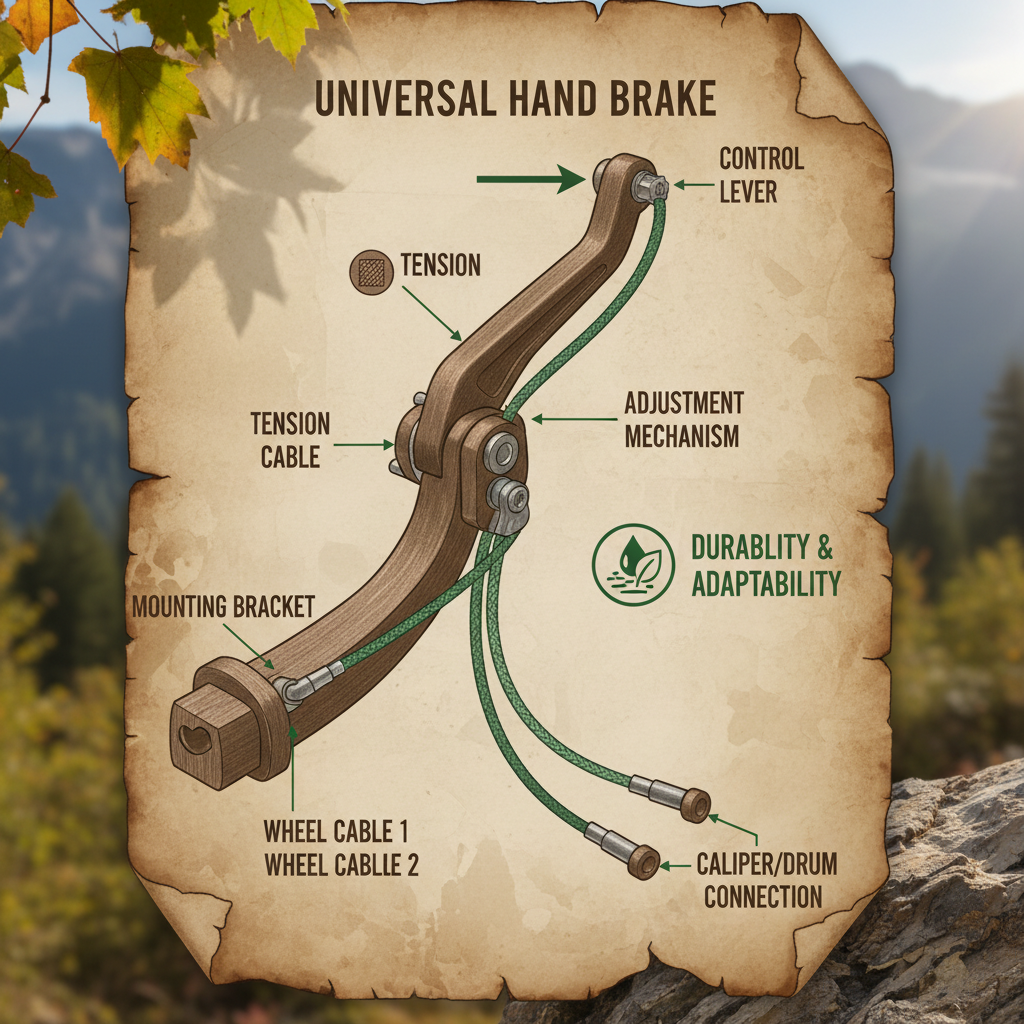
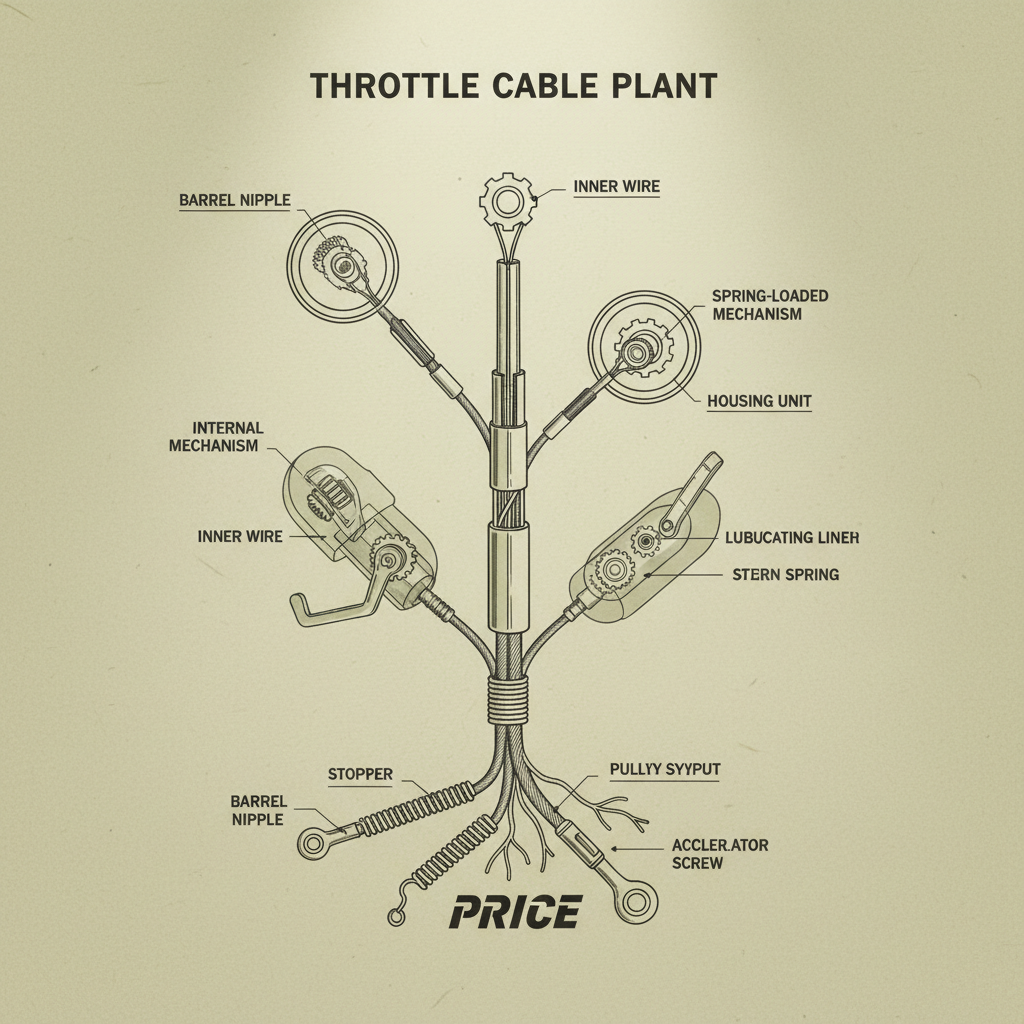
Understanding handbrake cable cost is crucial in various sectors, from automotive manufacturing to aftermarket parts suppliers. Efficiently managing this cost impacts vehicle safety, production margins, and ultimately, consumer pricing. A thorough understanding allows businesses to optimize their supply chains, negotiate better rates with vendors, and maintain competitive pricing while adhering to stringent quality standards. This, in turn, fosters trust and reliability within the industry.
The global automotive industry is experiencing significant shifts, with increased demand for electric vehicles and advanced driver-assistance systems. These changes necessitate innovative brake systems, affecting the demand and specifications of handbrake cables. The increasing complexity of these systems directly influences the handbrake cable cost, requiring manufacturers to balance performance, reliability, and affordability. Data from the International Organization for Standardization (ISO) highlights the growing emphasis on component traceability and safety protocols, impacting production costs.
Addressing fluctuations in handbrake cable cost is paramount, particularly given ongoing global supply chain challenges. Rising raw material prices (steel, polymers), logistical bottlenecks, and geopolitical factors all contribute to price volatility. Successfully navigating these complexities requires robust cost analysis, strategic sourcing, and a proactive approach to risk management. Effective management of handbrake cable cost ultimately translates to a more resilient and sustainable automotive supply chain.


The handbrake cable, though seemingly a minor component, plays a critical role in vehicle safety. Understanding the factors driving its cost – material prices, manufacturing processes, and supplier networks – is essential for automotive manufacturers aiming to control overall production expenses. Maintaining a balance between cost-effectiveness and safety is the key challenge.
Effective cost management in handbrake cables doesn't just impact the bottom line; it also influences the quality and durability of the system. Investing in higher-quality materials or more precise manufacturing techniques can increase the initial handbrake cable cost but often leads to reduced maintenance, fewer warranty claims, and increased customer satisfaction. This demonstrates a long-term value proposition.
The primary drivers of handbrake cable cost are raw material prices (steel, polymers), manufacturing complexity, production volume, and logistical expenses. Global market conditions, geopolitical events, and supply chain disruptions also play a crucial role. Effective cost management requires a comprehensive understanding of these interconnected factors.
Manufacturers can reduce handbrake cable cost through several strategies, including negotiating favorable contracts with suppliers, diversifying sourcing, implementing lean manufacturing principles, investing in automation, and optimizing logistical processes. Value engineering, which involves optimizing component design without compromising performance, is also a valuable approach.
The increasing adoption of EPB systems presents a potential challenge to traditional handbrake cable manufacturers. As EPB systems replace mechanical cables, the demand for traditional handbrake cables may decrease, potentially impacting their cost and market share. Manufacturers need to adapt by investing in EPB technology or diversifying their product portfolio.
Supply chain disruptions, such as those caused by natural disasters or geopolitical instability, can lead to shortages of raw materials, increased transportation costs, and production delays. These factors directly translate to higher handbrake cable costs. Proactive risk management and diversified sourcing are crucial for mitigating these impacts.
Robust quality control measures are essential for minimizing defects, rework, and warranty claims, all of which contribute to higher costs. Investing in employee training and implementing rigorous testing procedures can ensure product quality and reduce the overall cost of ownership.
Effective cost tracking and analysis require a detailed breakdown of all cost components, from raw materials to manufacturing and logistics. Implementing a robust cost accounting system, utilizing data analytics tools, and regularly monitoring market trends can provide valuable insights for identifying cost reduction opportunities.
In conclusion, understanding and effectively managing handbrake cable cost is crucial for automotive manufacturers seeking to maintain profitability, enhance product quality, and remain competitive in a dynamic global market. Factors ranging from raw material prices to manufacturing complexity and supply chain resilience all play significant roles. A proactive and data-driven approach, embracing innovation and sustainability, is essential for navigating future challenges.
Looking ahead, investing in advanced materials, automation, and strategic sourcing will be vital for optimizing handbrake cable cost. Adaptation to emerging technologies, such as electric parking brakes, and a commitment to continuous improvement will be key to long-term success. Visit our website at handbrake cable cost to learn more about our solutions and services.

 Afrikaans
 Albanian
 Amharic
 Arabic
 Armenian
 Azerbaijani
 Basque
 Belarusian
 Bengali
 Bosnian
 Bulgarian
 Catalan
 Cebuano
 Corsican
 Croatian
 Czech
Czech
 Danish
 Dutch
Dutch
 Esperanto
 Estonian
 Finnish
 French
 Frisian
 Galician
 Georgian
 German
 Greek
Greek
 Gujarati
 Haitian Creole
 Hausa
Hausa
 Hawaiian
 Hebrew
 Hindi
Hindi
 Miao
Miao
 Hungarian
 Icelandic
 Igbo
Igbo
 Indonesian
 Irish
Irish
 Italian
 Japanese
 Javanese
 Kannada
 Kazakh
 Khmer
Khmer
 Rwandese
 Korean
 Kurdish
 Kyrgyz
 Lao
Lao
 Latin
Latin
 Latvian
 Lithuanian
 Luxembourgish
 Macedonian
 Malgashi
 Malay
Malay
 Malayalam
 Maltese
 Maori
Maori
 Marathi
 Mongolian
 Myanmar
 Nepali
 Norwegian
 Norwegian
 Occitan
 Pashto
 Persian
 Polish
 Portuguese
 Punjabi
 Romanian
 Russian
 Samoan
 Scottish Gaelic
 Serbian
 Sesotho
 Shona
Shona
 Sindhi
 Sinhala
 Slovak
 Slovenian
 Somali
 Spanish
 Sundanese
 Swahili
 Swedish
 Tagalog
 Tajik
Tajik
 Tamil
Tamil
 Tatar
Tatar
 Telugu
 Thai
Thai
 Turkish
 Turkmen
 Ukrainian
 Urdu
Urdu
 Uighur
 Uzbek
Uzbek
 Vietnamese
 Welsh
Welsh
 Bantu
Bantu
 Yiddish
 Yoruba
 Zulu
Zulu
 English