To be honest, things are moving fast these days. Everyone's talking about smart cables, self-adjusting mechanisms...fancy stuff. But after spending the last twenty years crawling around construction sites, I've learned that "smart" doesn't always mean better. It usually means more things to break. And believe me, when things break on a Monday morning, nobody's thinking about innovation, they're just thinking about getting the job done.
Have you noticed how everyone's obsessed with weight reduction? Lightweight materials, thinner diameters... all good on paper. But try telling that to the guys installing these cables in freezing temperatures with thick gloves on. They need something they can grip, something that feels solid. That's where things get tricky, you know? It’s a constant balancing act.
I encountered this at the Qingdao port factory last time, a big order for marine applications. They were pushing for some new polymer blend to reduce corrosion. Looked fantastic in the lab. But the guys handling it complained it felt…slippery. Like holding wet spaghetti. Ended up going with a good old-fashioned galvanized steel core, coated with a triple layer of PVC. Not sexy, but it works.
Strangely enough, the biggest trend I’m seeing isn't about new materials or fancy designs. It's about traceability. Customers want to know exactly where every component comes from, how it was made, and what its performance history is. Supply chain issues, you know? Makes sense. And honestly, it's about time. It used to be 'good enough' to meet the specs. Now, they want the whole story.
That means a lot more emphasis on documentation, quality control, and, frankly, dealing with paperwork. The guys on the shop floor aren’t thrilled, but it's happening. And it pushes everyone—the handbrake cable makers, the suppliers, us—to be more accountable.
Honestly? Underestimating the environment it’s going into. They pick a cable that looks good on paper, but doesn’t account for temperature extremes, UV exposure, or chemical contaminants. I’ve seen too many cables fail because someone just didn’t think things through. You need to know what conditions it'll be working in and choose materials accordingly, even if it costs a little more upfront.
Crucial. Absolutely crucial. A weak connector will ruin a perfectly good cable. You need connectors that are properly sealed, corrosion-resistant, and compatible with the cable’s material. And make sure they’re installed correctly! A poorly crimped connector is just asking for trouble. Always check for proper pull-out force.
That depends entirely on the application and the quality of the cable. A well-maintained cable in a mild environment could last for 10 years or more. But one exposed to harsh conditions or subjected to heavy use might only last a few years. Regular inspections are key to extending its lifespan. Look for signs of wear, corrosion, or damage.
Generally, no. It's almost always better to replace it. Trying to patch up a damaged cable is a temporary fix at best, and it could compromise its integrity. If the damage is minor, you might be able to re-terminate the connector, but even then, it's not a guaranteed solution. Safety first, always.
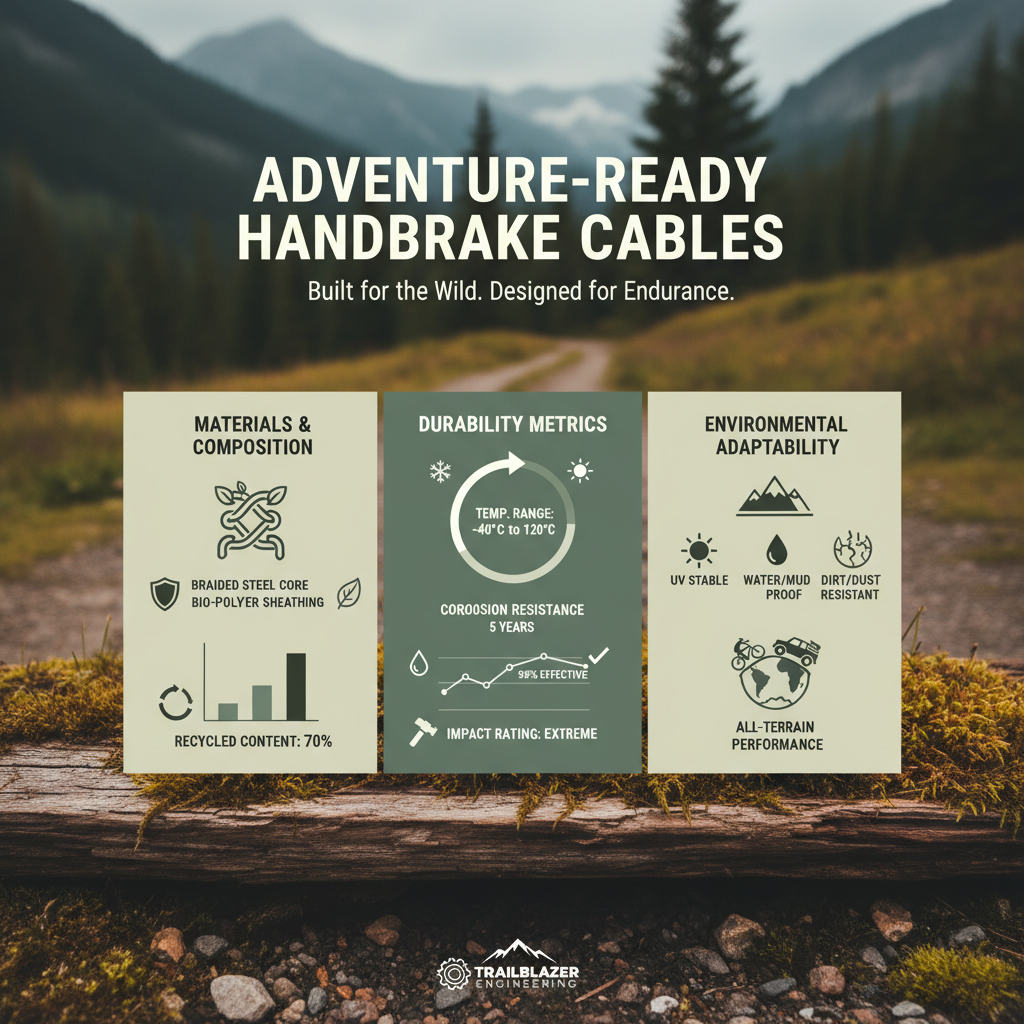
We’re seeing a lot of interest in bio-based polymers and recycled materials. People are looking for more sustainable options. But the challenge is finding materials that meet the performance requirements without sacrificing durability or reliability. It’s a work in progress, but there are some promising developments on the horizon.
Accelerated aging is our friend. We subject cables to extreme temperatures, humidity, and UV exposure for extended periods to simulate years of real-world use. We also perform cycle testing to assess their fatigue resistance. It’s not a perfect science, but it gives us a good indication of how they’ll hold up over time. And, of course, we rely on feedback from our customers in the field.
Ultimately, whether a handbrake cable works or not boils down to one thing: can it reliably transmit force when it’s needed most? All the fancy materials, sophisticated designs, and rigorous testing are meaningless if it fails when someone is relying on it.
Look, these aren't glamorous things. They're just cables. But they’re critical components in a lot of important applications. The worker will know the moment he tightens the screw if it's a good cable, and that’s the only validation we really need. So, focus on quality, durability, and reliability. And don’t be afraid to ask questions. And frankly, don't skimp on the small stuff.

 Afrikaans
 Albanian
 Amharic
 Arabic
 Armenian
 Azerbaijani
 Basque
 Belarusian
 Bengali
 Bosnian
 Bulgarian
 Catalan
 Cebuano
 Corsican
 Croatian
 Czech
Czech
 Danish
 Dutch
Dutch
 Esperanto
 Estonian
 Finnish
 French
 Frisian
 Galician
 Georgian
 German
 Greek
Greek
 Gujarati
 Haitian Creole
 Hausa
Hausa
 Hawaiian
 Hebrew
 Hindi
Hindi
 Miao
Miao
 Hungarian
 Icelandic
 Igbo
Igbo
 Indonesian
 Irish
Irish
 Italian
 Japanese
 Javanese
 Kannada
 Kazakh
 Khmer
Khmer
 Rwandese
 Korean
 Kurdish
 Kyrgyz
 Lao
Lao
 Latin
Latin
 Latvian
 Lithuanian
 Luxembourgish
 Macedonian
 Malgashi
 Malay
Malay
 Malayalam
 Maltese
 Maori
Maori
 Marathi
 Mongolian
 Myanmar
 Nepali
 Norwegian
 Norwegian
 Occitan
 Pashto
 Persian
 Polish
 Portuguese
 Punjabi
 Romanian
 Russian
 Samoan
 Scottish Gaelic
 Serbian
 Sesotho
 Shona
Shona
 Sindhi
 Sinhala
 Slovak
 Slovenian
 Somali
 Spanish
 Sundanese
 Swahili
 Swedish
 Tagalog
 Tajik
Tajik
 Tamil
Tamil
 Tatar
Tatar
 Telugu
 Thai
Thai
 Turkish
 Turkmen
 Ukrainian
 Urdu
Urdu
 Uighur
 Uzbek
Uzbek
 Vietnamese
 Welsh
Welsh
 Bantu
Bantu
 Yiddish
 Yoruba
 Zulu
Zulu
 English