
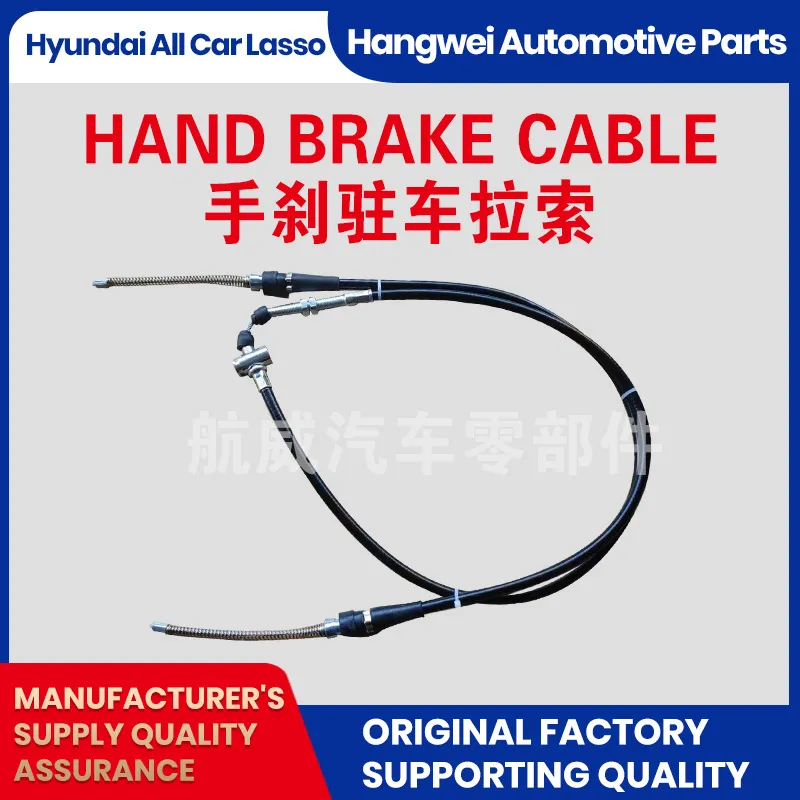
The Myanmar automotive market is characterized by a diverse fleet of aging Japanese imports and newer commercial vehicles. In this environment, the hand brake cable is subject to extreme stress due to the country's high humidity and monsoon seasons, which accelerate the oxidation of steel cores and degradation of outer housings.
Local workshops frequently struggle with non-standardized parts, leading to a high demand for a universal handbrake cable that can be adapted to various models. The prevalence of unpaved roads in rural regions like Shan or Mandalay further increases the risk of cable snapping due to debris penetration and mechanical fatigue.
Consequently, there is a growing shift toward professional-grade components. The market is moving away from generic replacements toward handbrake cables made to order that meet specific OEM tolerances, ensuring that safety mechanisms function reliably under the heavy loads typical of Myanmar's logistics sector.