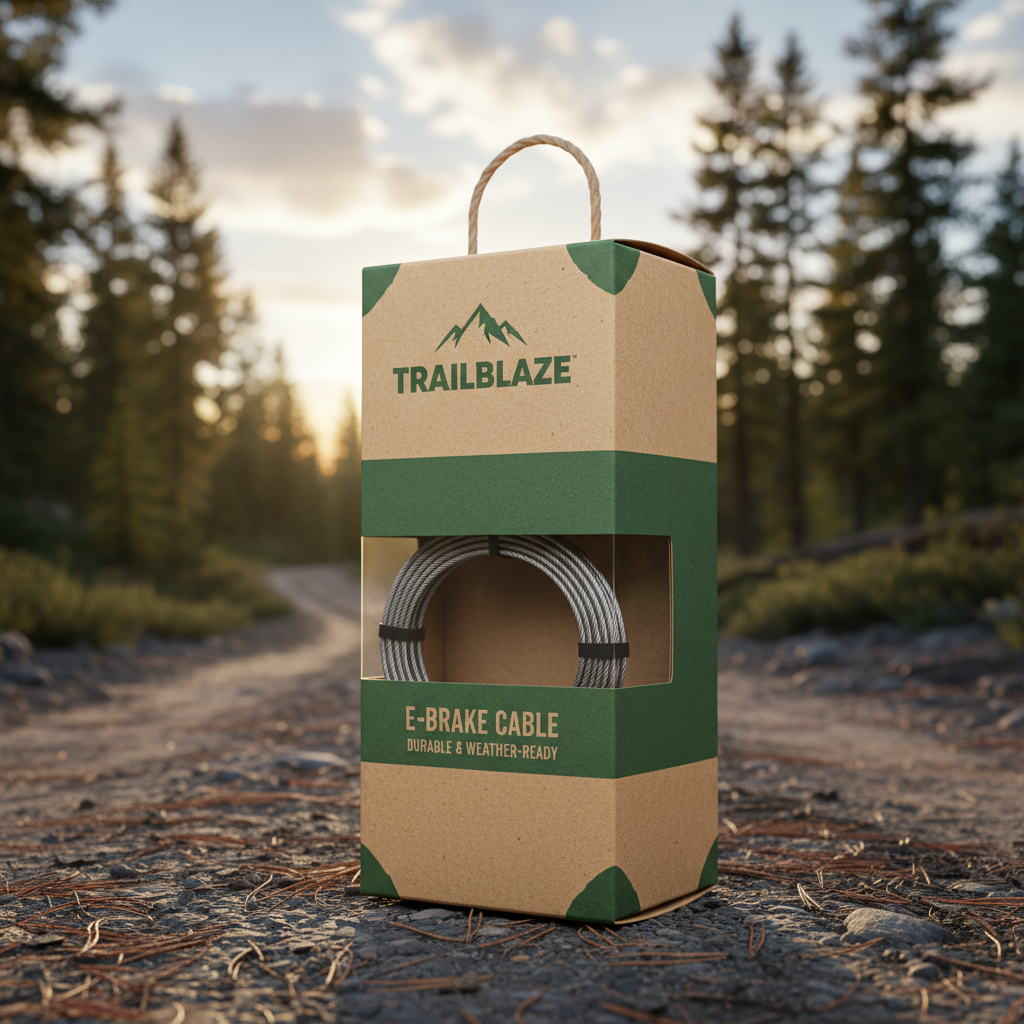
Selecting reliable handbrake cable manufacturers is a critical decision for automotive OEMs and aftermarket suppliers who prioritize vehicle safety and structural integrity. The handbrake cable is not merely a connector; it is the primary mechanical link that ensures a vehicle remains stationary under various gradients and environmental stresses.
In an era of increasing electronic parking brakes, the demand for high-precision mechanical cables remains steady for diverse vehicle segments, including commercial trucks and entry-level passenger cars. The challenge lies in finding manufacturers who can balance material tensile strength with the flexibility required for complex chassis routing.
This guide examines the technical benchmarks of cable production, the evaluation criteria for selecting a manufacturing partner, and the specific performance indicators that separate industrial-grade control cables from generic alternatives.

Technical Requirements for Automotive Brake Control Cables

Automotive handbrake cables must withstand extreme longitudinal tension while resisting lateral friction and environmental corrosion. Unlike accelerator or clutch cables, the handbrake system is often subject to long periods of static tension, which can lead to material creep or permanent elongation if the manufacturing process is substandard.
The primary technical challenge is achieving a low friction coefficient between the inner steel core and the outer housing. Any internal resistance in the cable assembly increases the pedal effort required from the driver and can lead to uneven braking force distribution between the rear wheels.
Quality manufacturers utilize high-carbon steel wires and specialized lubricants to ensure that the cable maintains its linearity. This is essential for precise adjustment and consistent engagement of the braking mechanism over the vehicle's entire lifecycle.
Core Engineering Standards for High-Durability Cables
Engineering a superior handbrake cable requires a strict adherence to ISO and IATF standards. The core must be constructed from high-strength stranded steel, ensuring that if a single wire strand fails, the overall assembly retains enough structural integrity to maintain the parking function.
The outer sheath must be engineered from weather-resistant polymers that prevent moisture ingress. Water penetration into the cable housing is the leading cause of internal corrosion and subsequent cable snapping, particularly in regions where road salt is used during winter.
Furthermore, the end-terminals must be swaged with precise force to prevent slippage under peak load. This requires automated swaging machinery that can be calibrated to micron-level tolerances, ensuring the terminal is permanently fused to the steel core.
Operational Applications Across Diverse Vehicle Segments
The application of handbrake cables varies significantly depending on the vehicle architecture. In compact passenger cars, the cables are typically shorter and require tighter bends, necessitating a housing that resists kinking without collapsing internally.
For commercial vehicles and light trucks, the cables must handle significantly higher loads. These applications often utilize thicker gauge steel cores and reinforced outer jackets to withstand the increased tension needed to lock larger braking drums or discs.
Beyond handbrakes, these manufacturing capabilities extend to other control systems such as Shift Selector Cables and Clutch Push-Pull Cables. Each requires a different balance of elasticity and rigidity, but all rely on the same fundamental mastery of cable-and-housing interaction.
Evaluating Manufacturing Precision and Tensile Stability
Quantifying the quality of a cable manufacturer involves analyzing the variance in tensile strength across different production batches. A low variance indicates a stable manufacturing process and a reliable supply chain for raw materials.
When comparing generic cables to those produced by specialized automotive cable experts, the difference is most apparent in "elongation under load." High-quality cables exhibit minimal stretch, ensuring that the handbrake lever maintains a consistent "click" position over thousands of cycles.
handbrake cable manufacturers Performance Metrics
The data indicates that precision-manufactured cables maintain significantly higher stability in tensile strength and lower friction rates compared to industry averages, directly translating to a safer and more responsive braking experience.
Strategic Procurement and Supplier Quality Auditing
For procurement officers, auditing a manufacturer goes beyond reviewing certificates. It requires an analysis of the production floor, specifically how they handle wire drawing, heat treatment, and final assembly testing.
A critical audit point is the "Pull-out Test" for terminals. Manufacturers should provide data on the force required to separate the terminal from the core, ensuring it exceeds the maximum operational load of the braking system by a significant safety margin.
Additionally, the ability to provide customized solutions based on technical drawings is a hallmark of a mature supplier. This flexibility allows for the development of new vehicle models where cable routing is constrained by new chassis designs.
Material Innovations in Automotive Cable Manufacturing
Recent shifts in material science are enabling the production of cables that are both lighter and stronger. The integration of galvanized steel with advanced polymer coatings is reducing the overall weight of the control system while enhancing salt-spray resistance.
The industry is also seeing a move toward hybrid housing materials that offer better thermal stability. This ensures that the cable does not expand or contract significantly in extreme temperature fluctuations, maintaining a constant tension on the brake shoes.
While electronic systems are growing, the mechanical handbrake remains a vital redundancy. Future innovations are likely to focus on "low-friction" inner linings that eliminate the need for heavy greases, reducing environmental impact and maintenance requirements.
Comparative Framework for Cable Specification Selection
Selecting the right cable specification depends on the intended vehicle application and the expected operating environment. A cable designed for an urban commuter car will differ fundamentally from one designed for an off-road utility vehicle.
The following table provides a framework for comparing different cable specifications based on technical requirements and application scenarios.
| Specification Tier | Core Material | Primary Application | Key Performance Factor |
|---|---|---|---|
| Standard Grade | Galvanized Steel | Urban Passenger Cars | Cost-to-Life Balance |
| Heavy Duty | High-Carbon Alloy | Commercial Trucks | Max Tensile Strength |
| All-Weather | PVC Coated Steel | Cold Climate Regions | Corrosion Resistance |
| Precision Fit | Low-Friction Strands | Luxury Sedans | Pedal Feel/Smoothness |
| Off-Road Spec | Reinforced Braided | 4x4 Utility Vehicles | Abrasion Resistance |
| Custom OEM | Specified Alloy | New Model Prototypes | Dimensional Accuracy |
By aligning the specification tier with the vehicle's operational profile, manufacturers can avoid the risks of over-engineering (increasing costs) or under-engineering (compromising safety).
Frequently Asked Questions
Conclusion
The integrity of a vehicle's parking system depends entirely on the quality of the mechanical links. Choosing a partner among handbrake cable manufacturers requires a deep dive into their material selection, precision in swaging, and commitment to automotive quality standards like ISO16949.
For companies seeking reliable control cable solutions, including Accelerator, Clutch, and Shift Selector cables, reviewing the technical capabilities available through www.hweicable.com can provide the necessary insight into professional automotive cable manufacturing.